Overview
On the first day of school, I introduce students to Ron Berger's critique protocol for providing feedback to improve work. I begin by playing the following video in which Berger tells "The Story of Austin's Butterfly" to elementary school audiences. I then share a video of my former students explaining critique in their own words.
Next, I write Berger's critique rules on the board.
1. Be kind
- No hurtful comments.
- Be kind so that the creator will want to listen to you.
- No comments such as “It’s good.” or “I like it.”
- Be specific so that the creator will know exactly what you are talking about.
- No comments that cannot be used to improve the work or were already made by another student.
- Be helpful so that you will not tell the creator something she already knows.
I also write his critique guidelines.
- The creator introduces the work first and shares any information that may be relevant to the person giving critique.
- The person giving critique offers praise or "warm feedback" before constructive criticism or "cool feedback."
- The person giving critique uses “I” statements or asks questions whenever possible.
Then, in order to prepare students to critique each other's work, I model the critique protocol through a public critique of my first draft of this picture of an apple on the whiteboard. I state clearly that my objective was to recreate this image as closely as possible. In order to to complete this drawing to the best of my abilities, I study the image closely and list of its attributes I can describe. As I am completing my drawing, I can reference this success criteria as can students when they are giving me critique. I write their critique and transfer it into a new list of attributes each time I make a new draft.
Before I ask students to draw a first draft of the same apple and critique each other's work in pairs, I state clearly that their objective is to recreate this image as closely as possible, not to simply draw any apple. In order to scaffold students during this process, I provide them with a graphic organizer that allows them to plan their own drawings, document the feedback they receive from other students, and transfer to that critique to a plan for their subsequent drawings. I also provide students with sentence frames for each part of the protocol, which I introduce one at a time, rather than all at once. I introduce the sentence frames in bold type during the first week, and I introduce a new sentence frame for each part of the critique protocol each week following this lesson.
- Ways to Introduce Work
- One thing I want you to know about my work is __________.
- I would like you to focus on how I __________.
- One idea I had was ___________.
- One goal I had was ___________.
- One difficulty I had was __________.
- I chose to __________.
- I was influenced by __________.
- I know I need to work on __________.
- Ways to Offer Praise
- I like how you __________.
- One thing I learned from your work is __________. Next time, I can __________.
- Ways to Offer Constructive Criticism
- Have you considered __________? I ask that question because __________.
- Maybe you could __________ because __________.
- Something that worked for me was __________ because __________.
- I’m curious why you __________ because __________.
- I’m confused by __________ because __________.
During this process, I ask all students to write down notes on the critique they receive so it may be considered as they begin their second drafts.
I ask students to participate in a cycle of publicly critiquing my drafts of the apple, drawing a new draft themselves, and receiving critiquing on their new draft each day during the first week of school before moving on to other projects. The drafts below were completed by me over a series of days during August 2013.
First Draft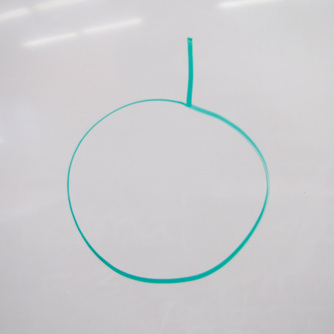
|
Final Draft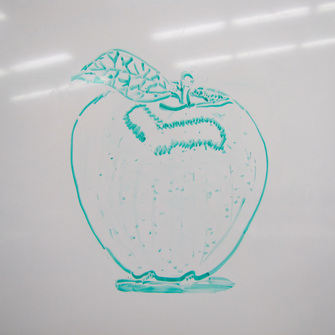
|
These drafts were completed by Nathan in 2012.

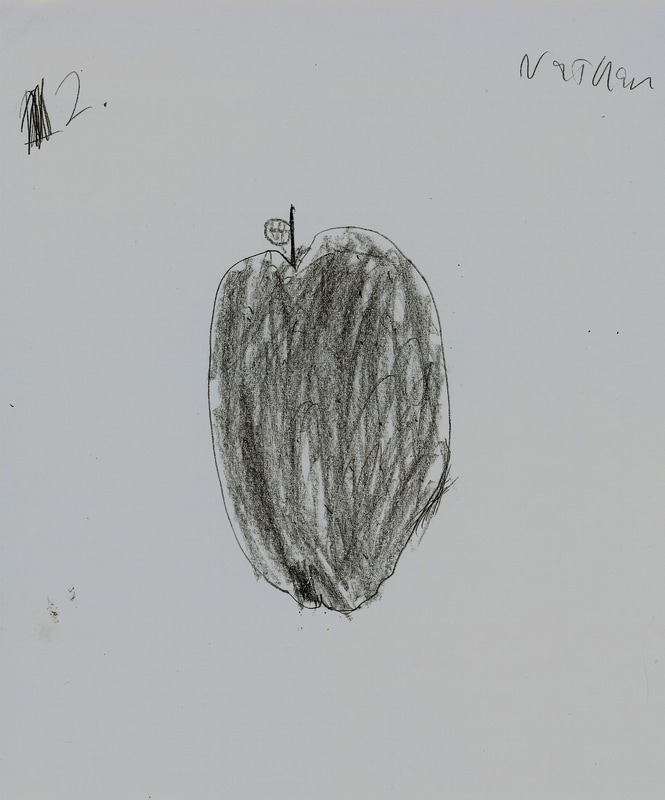
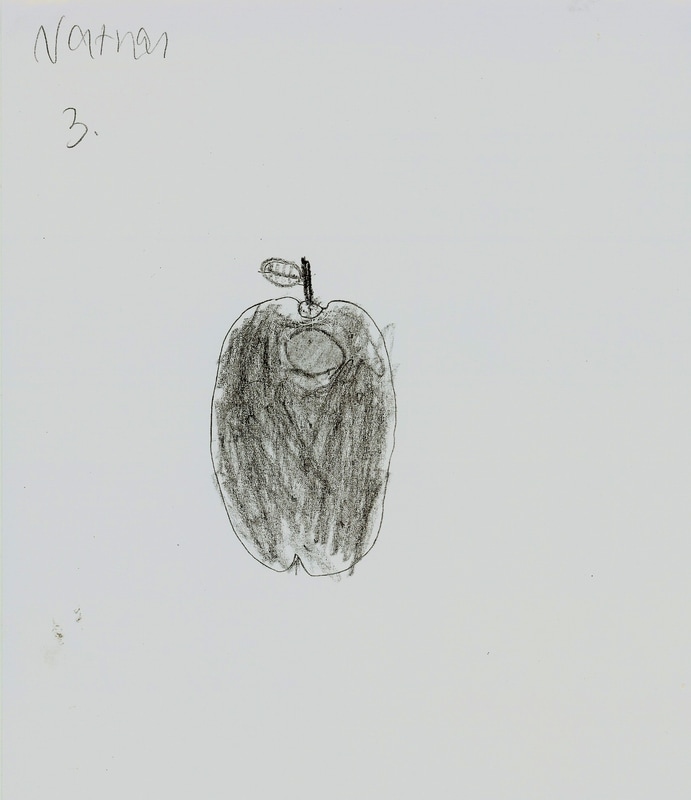
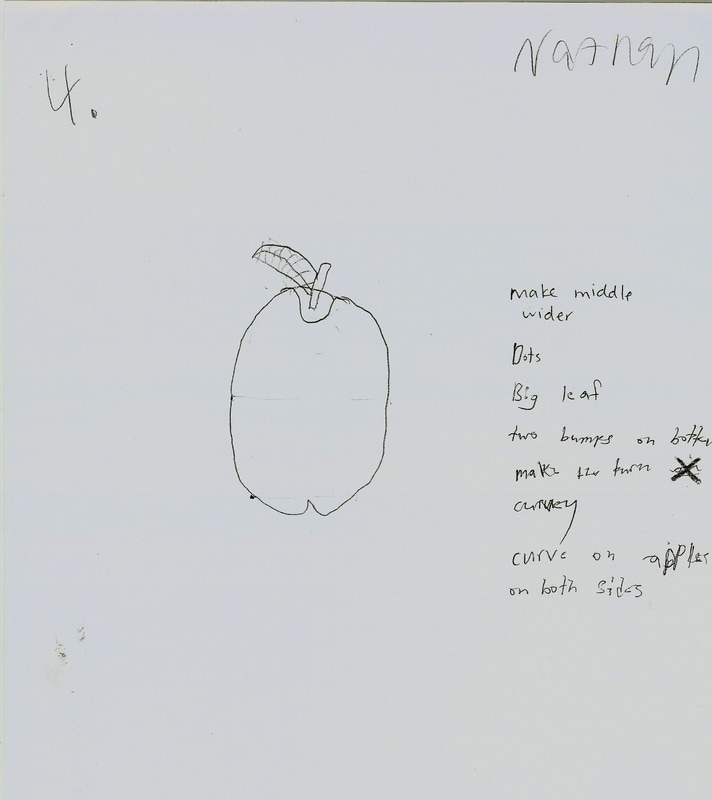
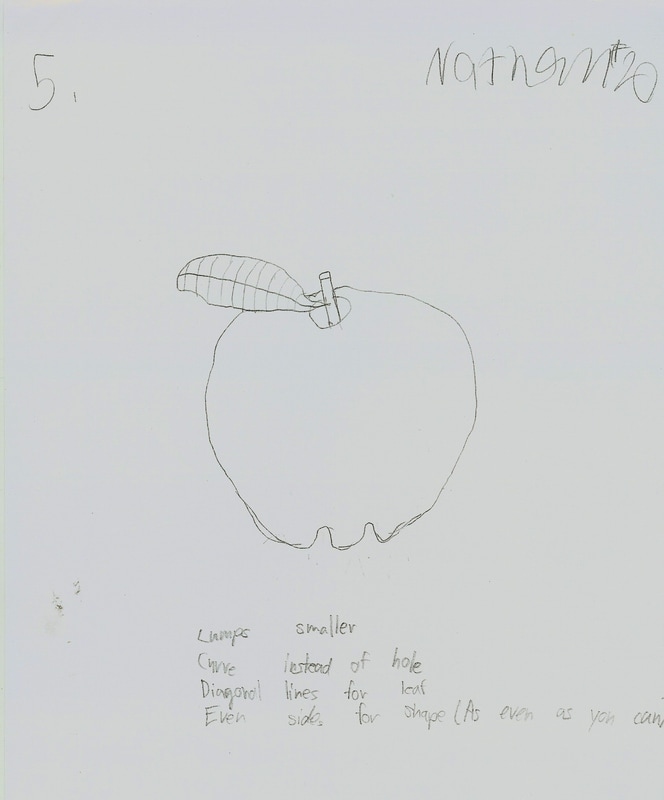
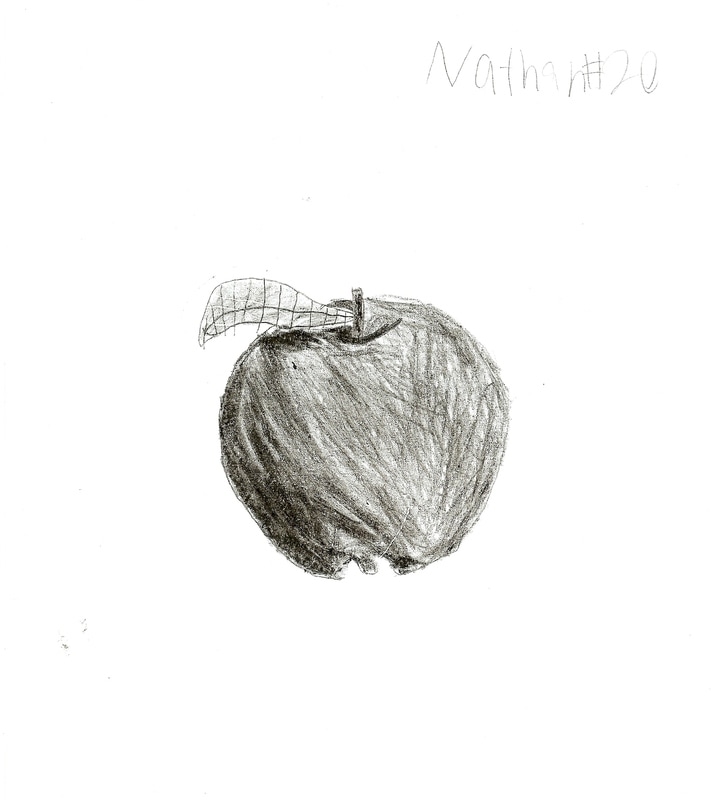
These drafts were completed by Cherry Pop in August 2013.
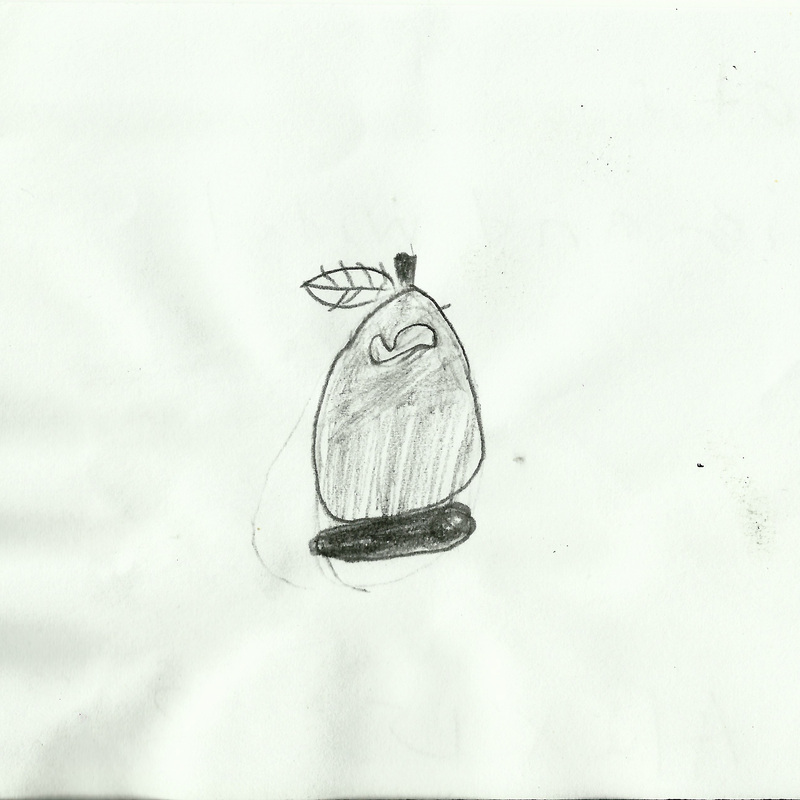
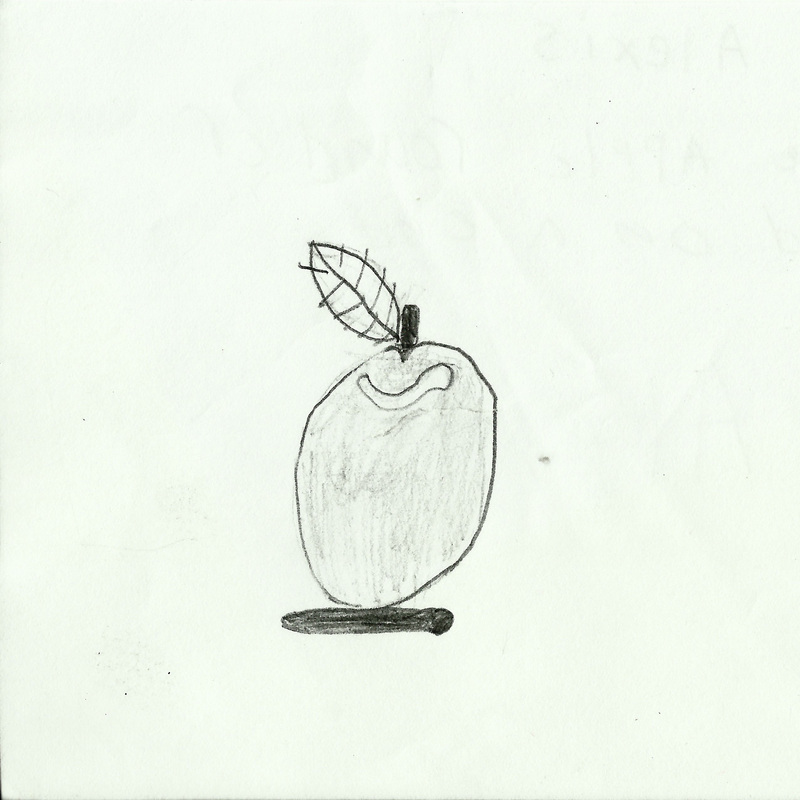
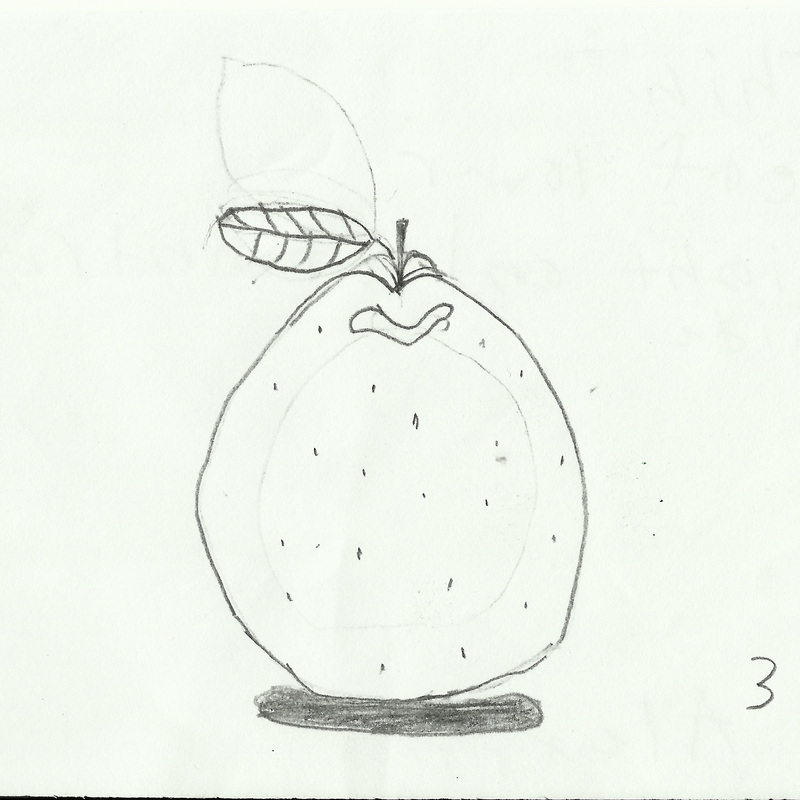
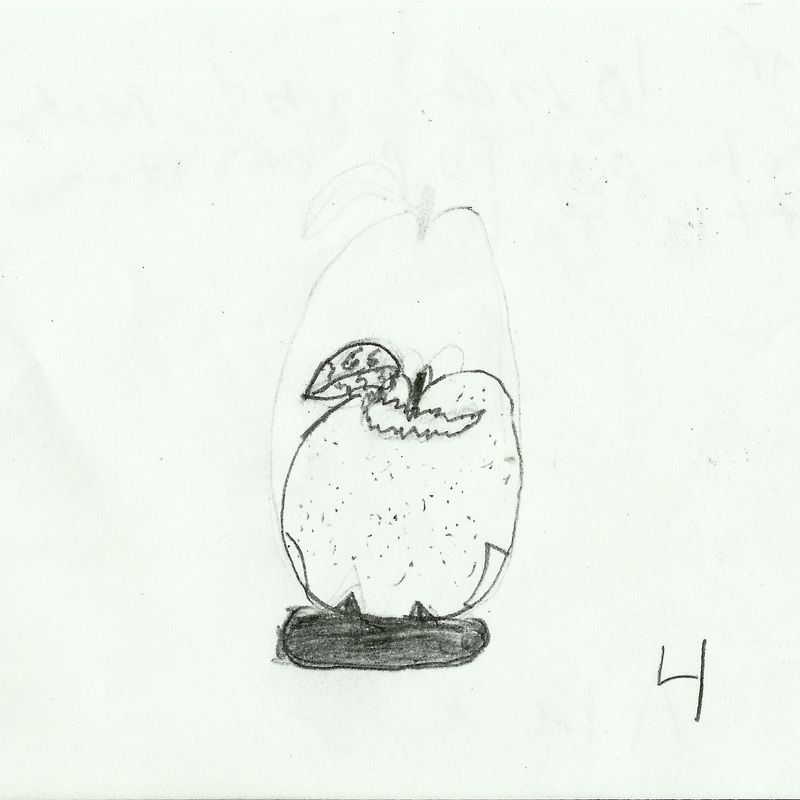

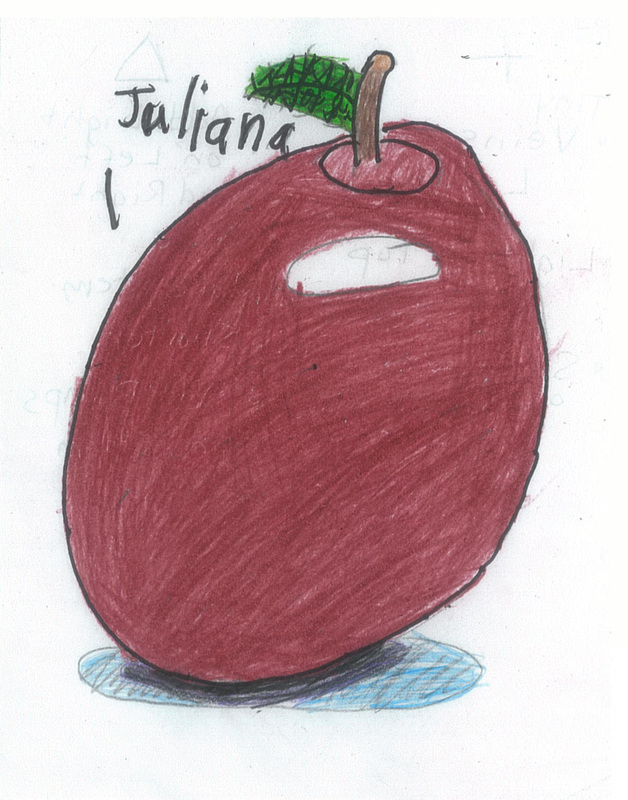
These drafts were completed by Smartie 22 in August 2014.
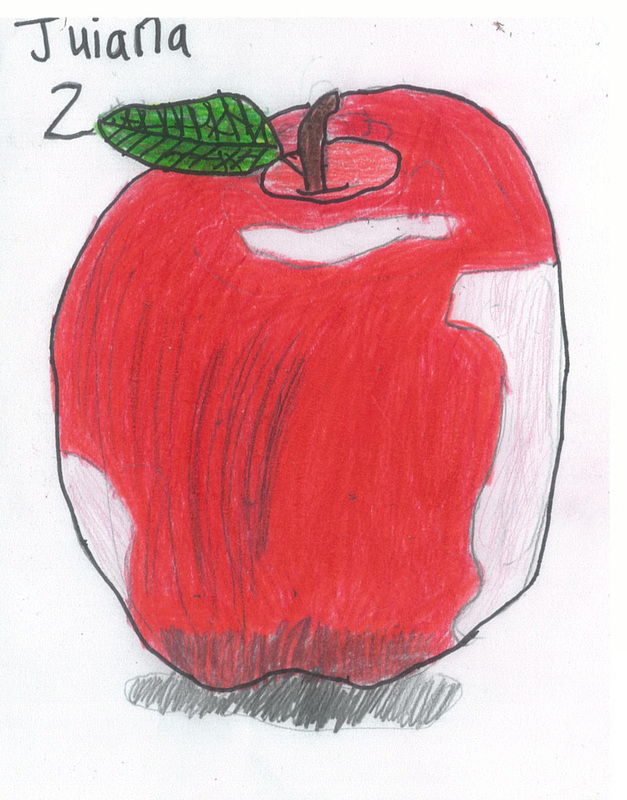
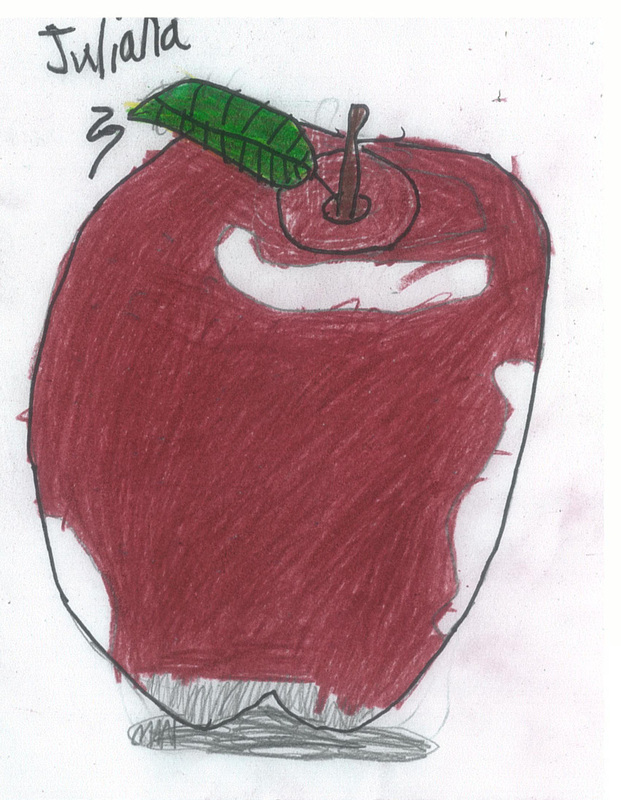

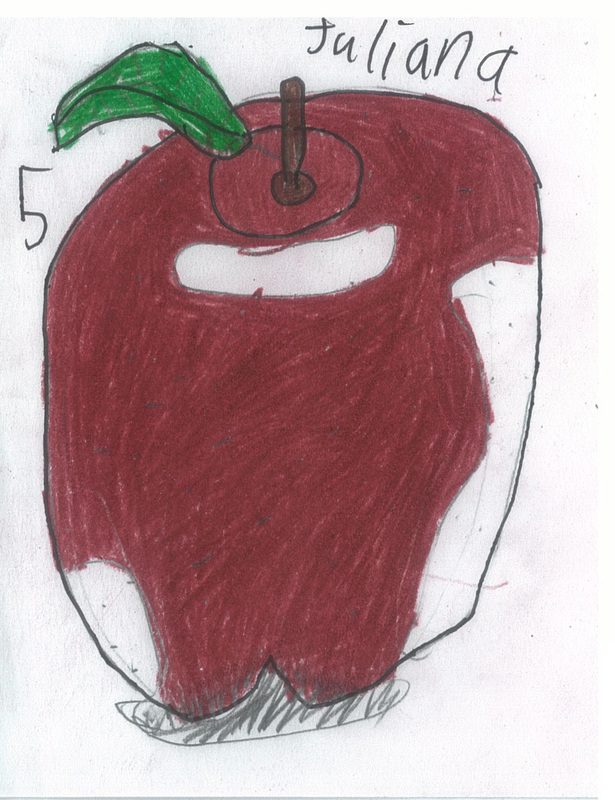
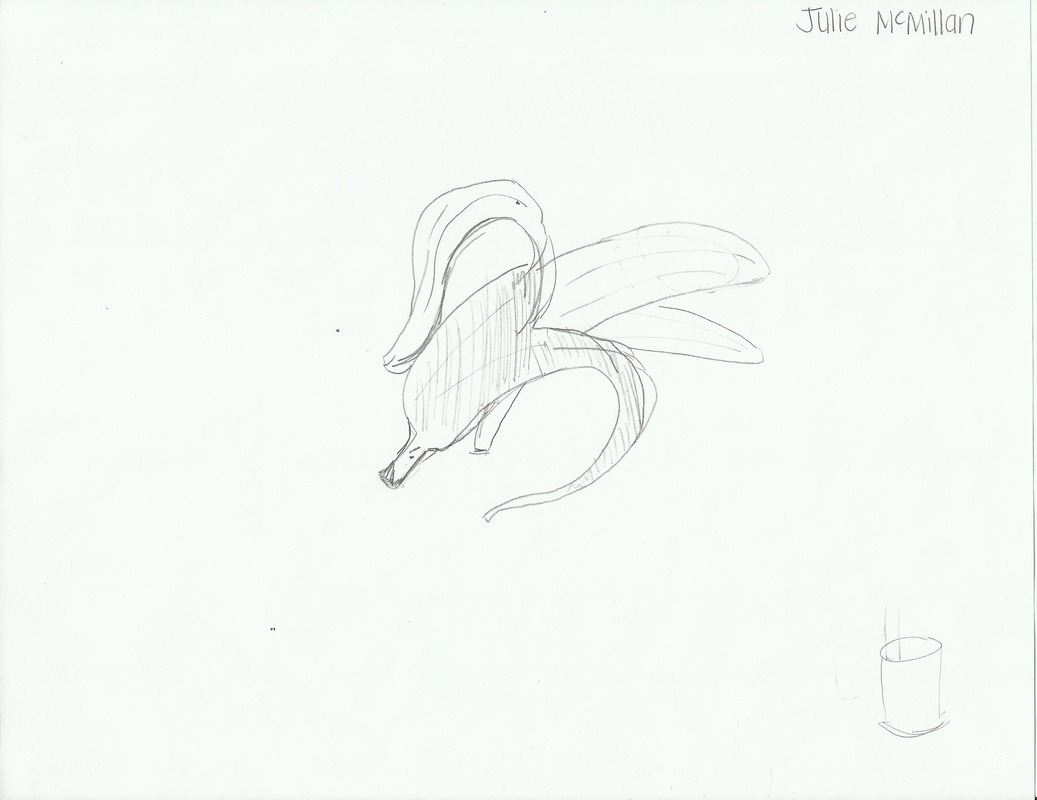
I used a similar process, using a picture of a banana, to teach a group of adults about critique during my final masters presentation in graduate school.
These drafts were completed by workshop participants in June 2012.
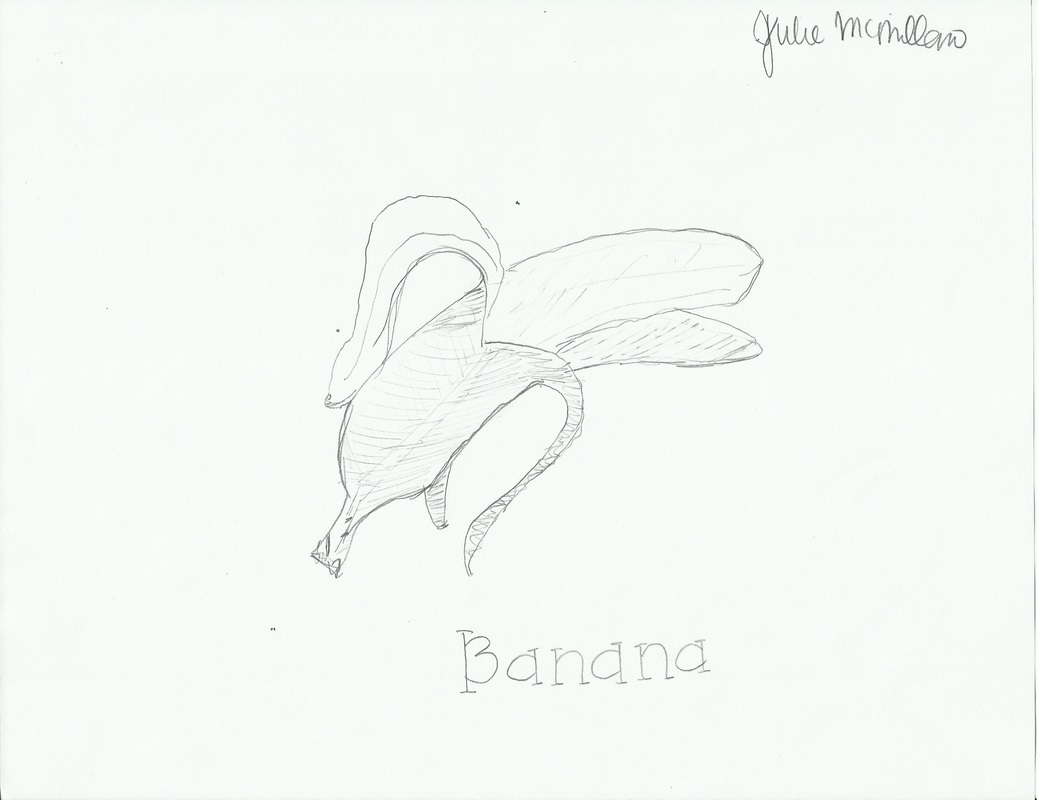
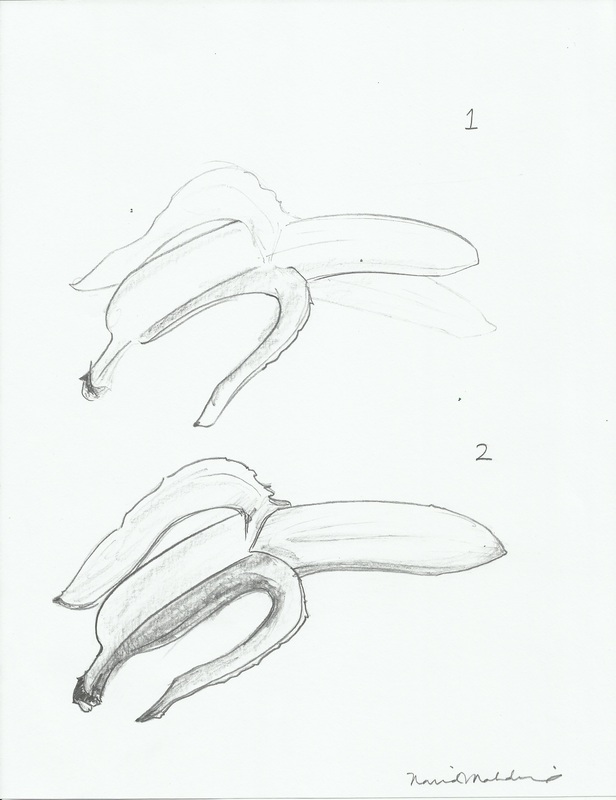
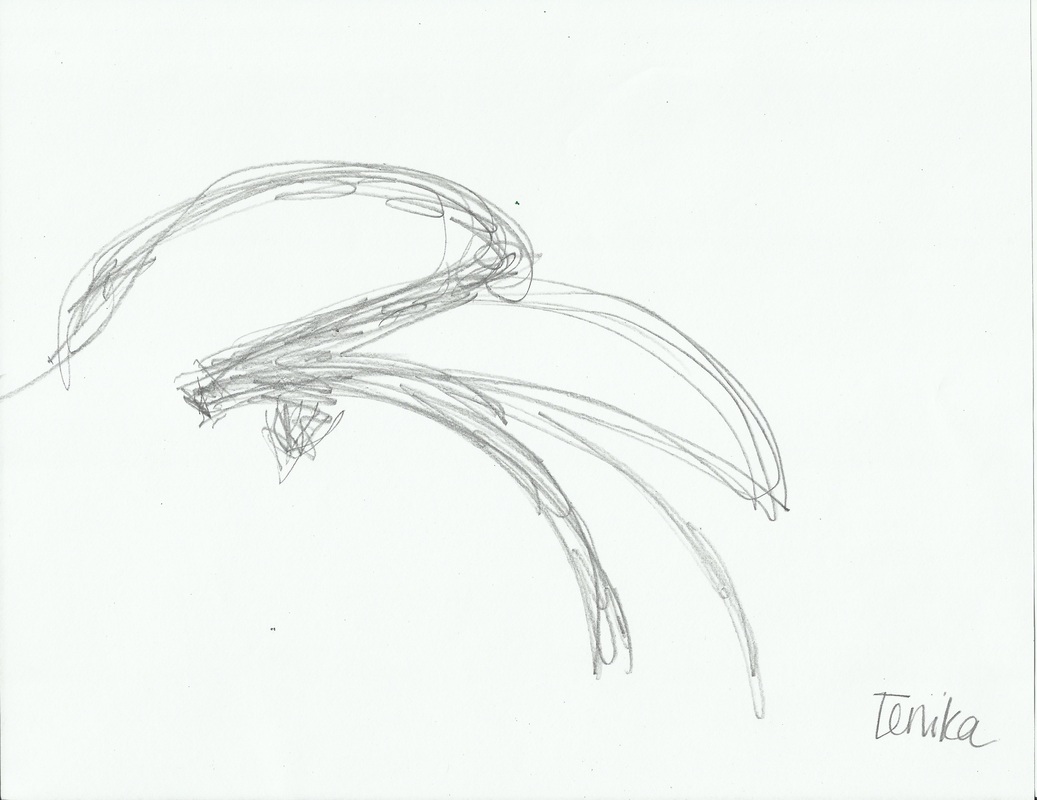

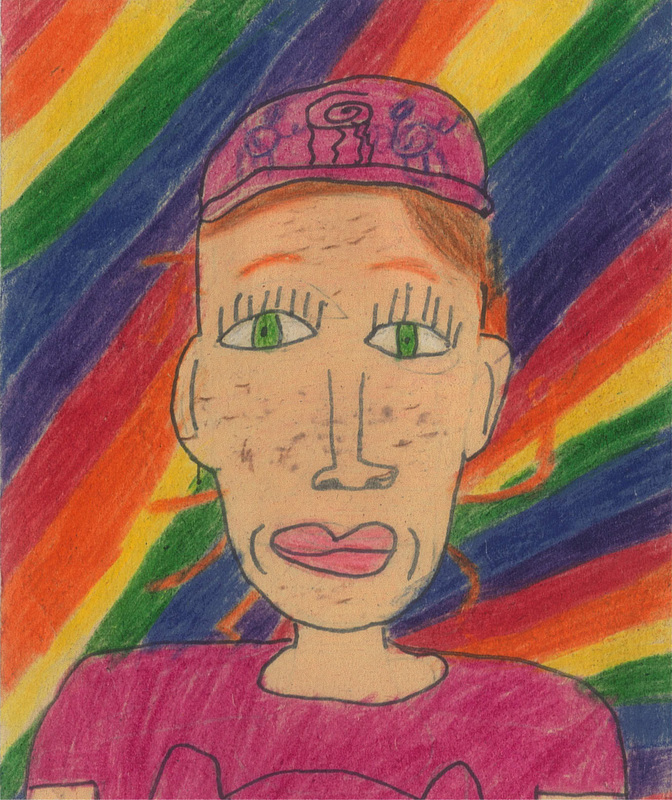
I repeat this process in which I ask students to participate in a cycle of publicly critiquing my work, drawing a draft themselves, and receiving critiquing on their new draft each day during the next two weeks of school with self-portraits. We experiment with mirrors and photographs, and we even trace photographs using a classroom lightbox. The drafts below were completed by me over a series of days during September 2013.
First Draft
|
Final Draft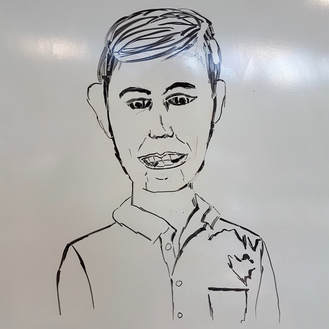
|
These drafts were completed by Doggie in September 2013.
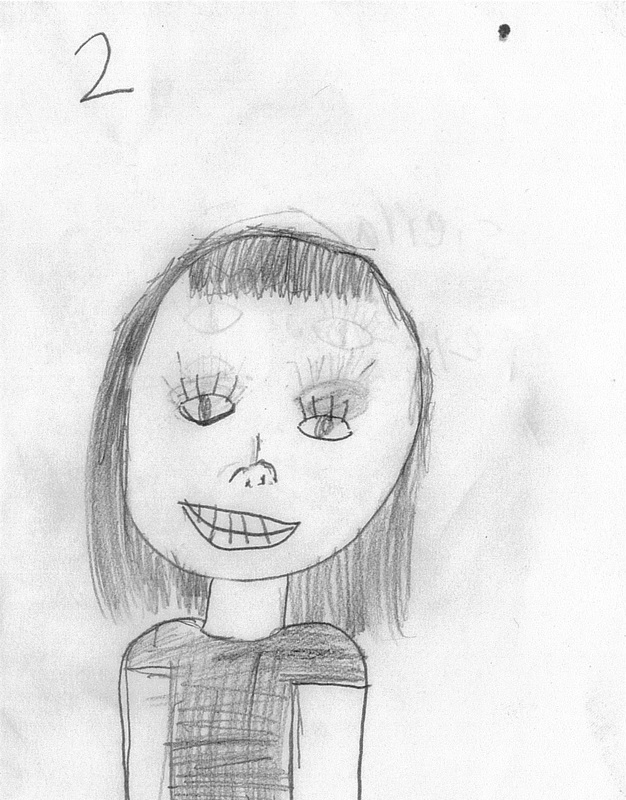
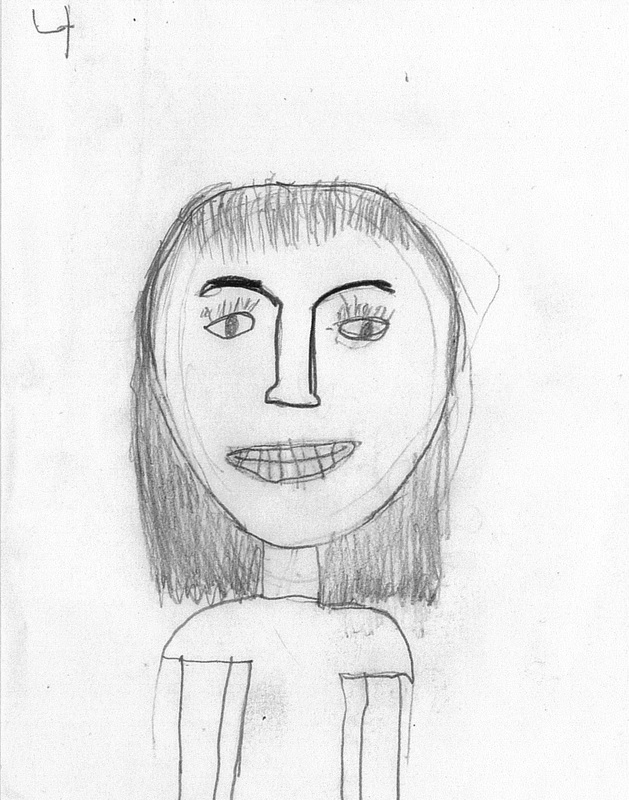
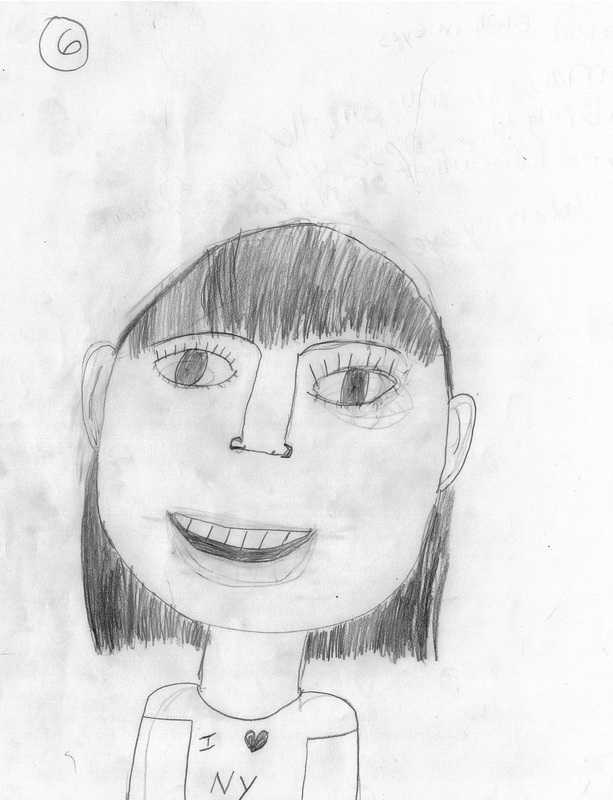
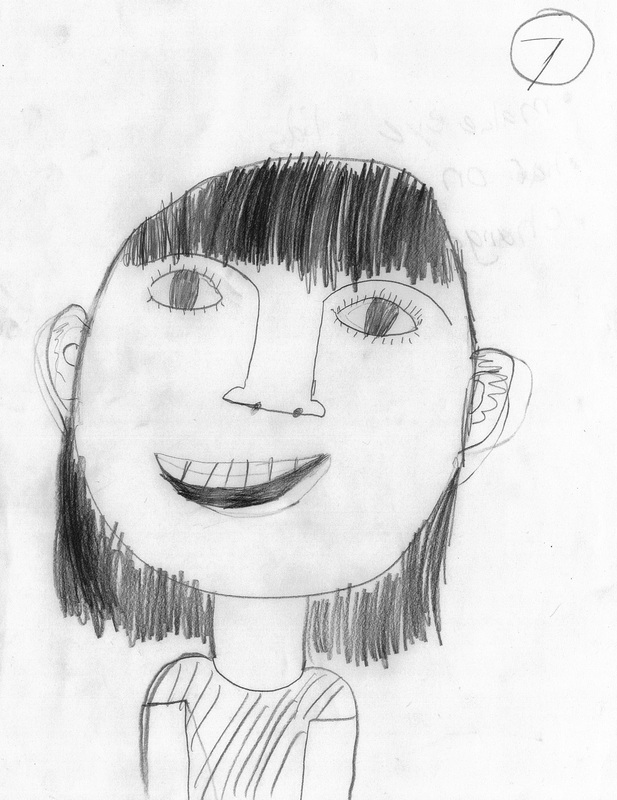

These drafts were completed by Smartie 22 in September 2014.

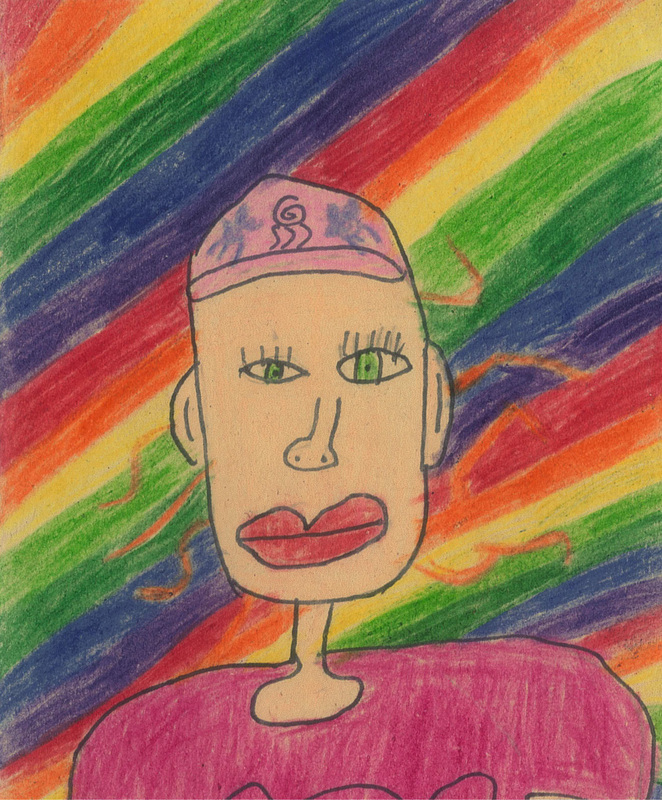
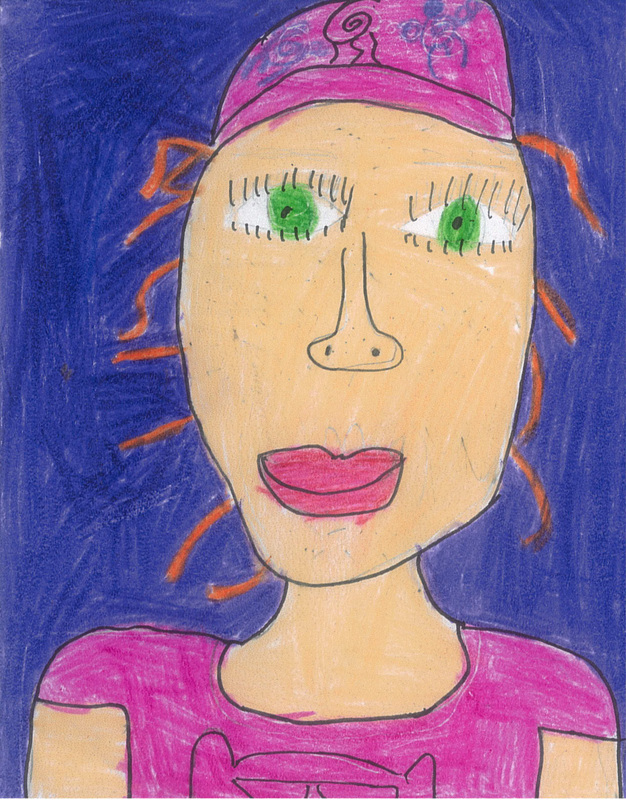
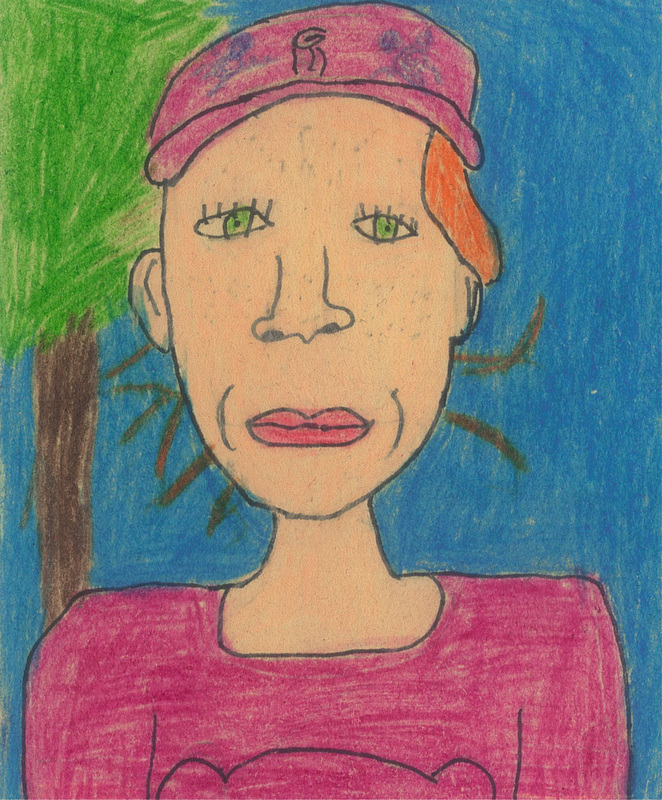
In addition to the in-depth critique process described above, Berger also has also created a process called gallery critique, in which each student first shares a draft - either on the wall or on his or her desk - and everyone walks around the room silently to look at them and some students then select drafts that impress them and discuss why in front of the rest of the class in order to help ensure that drafts are completed, ideas are generated, and strong models are recognized.